-
Four Senate Republicans again unite with Dems to block Trump's SAVE America Act
Four Senate Republicans broke ranks to kill another effort to pass President Donald Trump's marquee voter ID and election integrity legislation as the GOP marches to fund immigration enforcement.
Just like last time, Sens. Susan Collins, R-Maine, Lisa Murkowski, R-Alaska, and Mitch McConnell, R-Ky., and Thom Tills, R-N.C., joined all Democrats to thwart the move.
It’s the second attempt by Republicans to attach the Safeguarding American Voter Eligibility (SAVE) America Act to their budget reconciliation package, and the second time that they’ve failed to get the legislation across the line months after launching a quasi-floor takeover to debate the bill.
Trying to attach the bill to the nearly $70 billion budget reconciliation package geared toward funding Immigration and Customs Enforcement and Border Patrol meant that the amendment from Sen. Lindsey Graham, R-S.C., needed at least 60 votes to pass.
That threshold again proved too high a bar on Thursday night.
And it’s a result that further solidified the political reality in the upper chamber that the SAVE America Act has little chance of passing, given the unanimous Democratic resistance and lack of total buy-in among the Senate GOP, even if Senate Majority Leader John Thune, R-S.D., launched the long sought after talking filibuster.
Still, Graham challenged Democrats to bat down the amendment, accusing them of being "probably into cheating" in elections for not supporting voter ID.
"There's no other reason to say you don't have to have an ID. It just makes cheating easier," Graham said. "Who wants a noncitizen voting in our election if you're against that, that makes me wonder."
"And biological males playing girls sports [is] not good for anybody, and a minor should not be allowed to transition their sex," he continued. "That's the biggest change you can make in your entire life. You shouldn't be allowed to do that as a minor. This is what we say. What do you say?"
But Sen. Alex Padilla, D-Calif., noted "that just over a month ago, a similar proposal was defeated on a bipartisan basis."
"Current safeguards are working," Padilla said. "And yes, it is already unlawful for non-citizens to vote in the United States. What this amendment does is mirrors earlier attempts to push through the president's priorities, to try to take over elections, to ban vote by mail."
"And while we're at it, while they're at it, attacking trans folks during pride month, that's pretty damn offensive," he continued.
Read More: Four Senate Republicans again vote to kill Trump's SAVE Act voter ID bill | Fox News
-
Prichard council launches investigation
The Prichard City Council is launching an independent investigation into the city’s finances following months of infighting with Mayor Carletta Franks Davis, Councilwoman Stephanie Johnson-Norwood announced Thursday.
According to a press release issued by Johnson-Norwood, the City Council has made numerous unsuccessful attempts to review municipal finances since Davis took office in November. Because of the continued standoff, the City Council has hired an independent firm to assist with the investigation as of May 29. The investigation was launched Thursday.
Read More : Prichard council launches investigation | News | lagniappemobile.com
-
Austal USA expands submarine manufacturing capabilities with phase one of new facility
MOBILE, Ala. (WALA) - City, county and military leaders gathered at Austal USA to mark the opening of phase one of Module Manufacturing Facility Three, a milestone the company says strengthens its partnership with the United States Navy.
“We recognize that submarine manufacturing is one of the nation’s highest priorities and we’re just very excited to be supporting our country in increasing that manufacturing capability. They’re critical capabilities,” said Gene Miller, president of Austal USA.
Phase two is still under construction, but Miller said phase one is expected to bring up to 1,000 jobs to the Mobile area within the next year, opening up several job possibilities for locals.
“Phase one is going to have production space for fabrication work so welding, ship fitting, building the module structurally. It’ll have space for the outfitting of the module, electrical work, pipe fitting. We’ll be able to paint modules,” Miller said.
Navy aims to increase submarine production
The new facility is a win for the United States Navy, which aims to have one Columbia class ballistic missile submarine plus two Virginia class fast attack submarines per year. But the Navy says that pace won’t be enough. They’ll need to move faster to chip away at a growing backlog.
“We need Americans building high quality ships and submarines to ensure peace through strength and keep our oceans free and open,” said Vice Admiral Robert Gaucher, director of the U.S. Navy submarine program.
Gaucher left Austal with a bold challenge for their new facility.
“I know you’ve committed to me at least 660,000 hours of production by the end of this year, but what I really want is for you to exceed that and hit the target of 880,000 in 2026 and more than double that in 2027,” Gaucher said.
Miller said the new facility gives them exactly what they need to meet the challenge.
“It’s going to give us the space, the modern production capability that we’ll need to build the submarine modules efficiently but we’re very excited by that challenge. It’s a very hard challenge but the workforce here is fantastic,” Miller said.
Phase two is expected to be completed later this year.
Read More : Austal USA expands submarine manufacturing capabilities with phase one of new facility
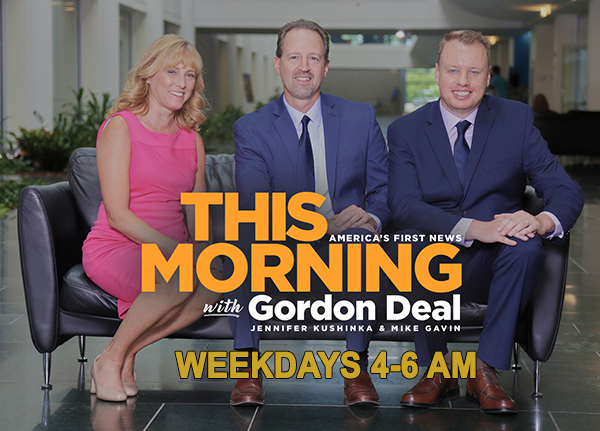
This Morning with Gordon Deal
FM Talk 1065

Mobile Mornings with Dan Brennan and Dalton Orwig
FM Talk 1065
The Jeff Poor Show
FM Talk 1065
Midday Mobile
FM Talk 1065
The Paul Finebaum Show
FM Talk 1065
The Michael Berry Show
FM Talk 1065

Sweet Home CannaBama
FM Talk 1065
Tonight in Mobile with Mr. Mobile
FM Talk 1065
The Joe Pags Show
FM Talk 1065
The Dana Show
FM Talk 1065
This Morning with Gordon Deal
FM Talk 1065
Mobile Mornings with Dan Brennan and Dalton Orwig
FM Talk 1065
The Jeff Poor Show
FM Talk 1065
Midday Mobile
FM Talk 1065
The Paul Finebaum Show
FM Talk 1065
The Michael Berry Show
FM Talk 1065
The George Williams Show
FM Talk 1065
Beyond the Blockchain
FM Talk 1065
The Joe Pags Show
FM Talk 1065
The Dana Show
FM Talk 1065
This Morning with Gordon Deal
FM Talk 1065
Mobile Mornings with Dan Brennan and Dalton Orwig
FM Talk 1065
The Jeff Poor Show
FM Talk 1065
Midday Mobile
FM Talk 1065
The Paul Finebaum Show
FM Talk 1065
The Michael Berry Show
FM Talk 1065
Scuttlebutt Radio
FM Talk 1065
The Joe Pags Show
FM Talk 1065
The Dana Show
FM Talk 1065
This Morning with Gordon Deal
FM Talk 1065
Mobile Mornings with Dan Brennan and Dalton Orwig
FM Talk 1065
The Jeff Poor Show
FM Talk 1065
Midday Mobile
FM Talk 1065
The Paul Finebaum Show
FM Talk 1065
The Michael Berry Show
FM Talk 1065
FM Talk 1065 - Best of the Week
FM Talk 1065
The Joe Pags Show
FM Talk 1065
The Dana Show
FM Talk 1065
This Morning with Gordon Deal
FM Talk 1065
Mobile Mornings with Dan Brennan and Dalton Orwig
FM Talk 1065
The Jeff Poor Show
FM Talk 1065
Midday Mobile
FM Talk 1065
The Paul Finebaum Show
FM Talk 1065
The Michael Berry Show
FM Talk 1065
FM Talk 1065 - Best of the Week
FM Talk 1065
The Joe Pags Show
FM Talk 1065

Outdoors Show with Don Dubuc
FM Talk 1065
FMTalk1065 Outdoors
FM Talk 1065

Prep Sports Report
FM Talk 1065

Southern Fairways
FM Talk 1065
FMTalk1065 - Best of the Week
FM Talk 1065
Retire Right Radio
FM Talk 1065

The Jolene Roxbury Variety Hour
FM Talk 1065

The Kim Komando Show
FM Talk 1065

Free Talk Live
FM Talk 1065
FMTalk1065 Outdoors
FM Talk 1065
Free Talk Live
FM Talk 1065
FMTalk1065 Best of the Week (Sunday AM)
FM Talk 1065
FMTalk1065 Outdoors
FM Talk 1065
The Jolene Roxbury Variety Hour
FM Talk 1065
Truitt News Radio
FM Talk 1065

Plain Living with Bill Finch
FM Talk 1065

Sip & Chew with Mike & Stu
FM Talk 1065
Coasting in Retirement with Josh Null
FM Talk 1065

What Would Your Money Say? with Swan Capital
FM Talk 1065

This Weekend with Gordon Deal
FM Talk 1065

Talking Dirty
FM Talk 1065

Relax and Retire Financial Services
FM Talk 1065
FM Talk - Best of the Week
FM Talk 1065

Plain Living with Bill Finch
FM Talk 1065
FMTalk1065 Outdoors
FM Talk 1065
Prep Sports Report (Sunday Replay)
FM Talk 1065
Free Talk Live
FM Talk 1065